
Cities and public transit
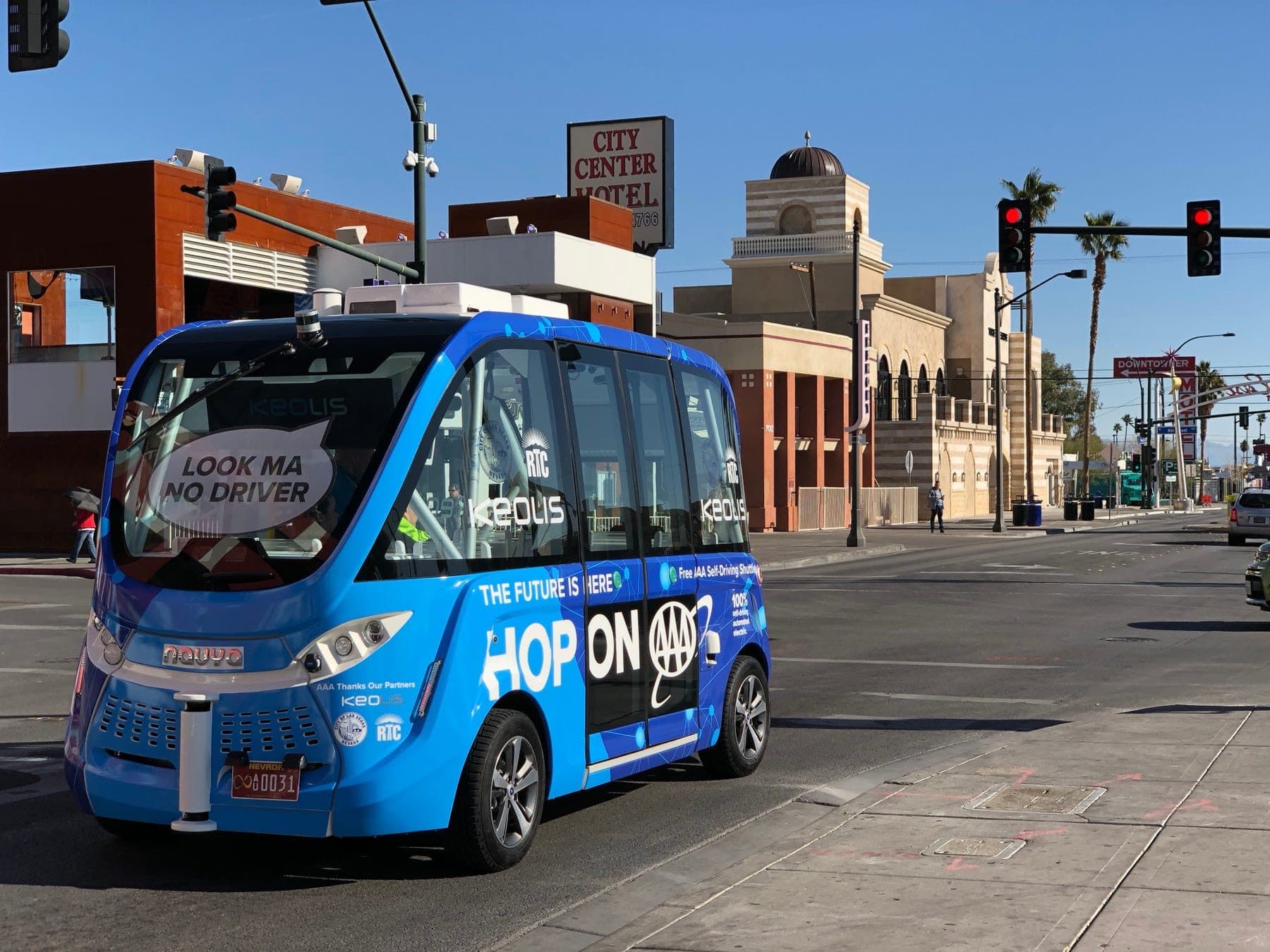
We assembled the ecosystem behind one of the first public autonomous shuttles in North America.
Before autonomy had an industry playbook, someone had to put a driverless vehicle on a public street with members of the public inside it, and answer for what happened next. There was no template. There was not even an agreed list of who needed to be in the room.
- Client
- City of Las Vegas
- Lead sponsor
- AAA
- Environment
- Public street, mixed traffic
- Year
- 2017
The situation
In 2017 there was no established process for authorizing a public-access autonomous shuttle in a US city. No template safety case, no regulatory precedent, no operational playbook, and a great deal of public attention.
The City of Las Vegas wanted to begin testing autonomy at a transit level. AAA came in as lead sponsor. Between an interested city and a willing sponsor sat a long list of parties who all had to want the same thing, and no obvious mechanism for getting them there.
Assembling the ecosystem
We started with the stakeholders. Not a list of names, but what each one actually needed out of this: what the city needed politically and operationally, what the sponsor needed to justify the investment, what the technology provider needed to learn, what the operator needed to run it safely, and what the public needed in order to get on board a vehicle with nobody driving.
Those needs do not naturally align. Working out where they overlapped, and structuring a program that served all of them at once, is what made the deployment possible. We put the ecosystem together.
Designing the pilot
From there we defined what the operation would actually look like. The concept of operations, the structure of the pilot itself, and how the whole thing would run day to day rather than on demonstration days.
We advised across effectively every element: the business case, the feasibility of the pilot as designed, and operational safety. Then we stayed through delivery, providing advisory support and oversight as the pilot ran and reality started editing the plan.
Why it matters
Much of what is now standard practice in low-speed AV deployment was worked out on programs like this one, by finding out which assumptions did not survive contact with a real street.
Almost every firm now advising on autonomy formed after the technology was already commercially viable. We were doing this when the answers did not exist yet, which is why our judgment about what will fail is worth something.
The hard part was never the vehicle. It was getting a city, a sponsor, an operator, a technology provider and the public to want the same thing at the same time.