
Defense and government
Autonomy on military bases, starting with the first one.
Long before autonomy had a commercial market, military installations were where it first had to work in a real operating environment. We originated the first non-tactical driverless pilot on a US base. It did not reach full operation, because the technology of that era was not reliable enough to get there. That is the most useful thing we can tell you about it.
- Clients
- US Army, DoD, US Ignite
- Environment
- Installations and base operations
- Period
- 2011 to present
- Program
- ARIBO and successors
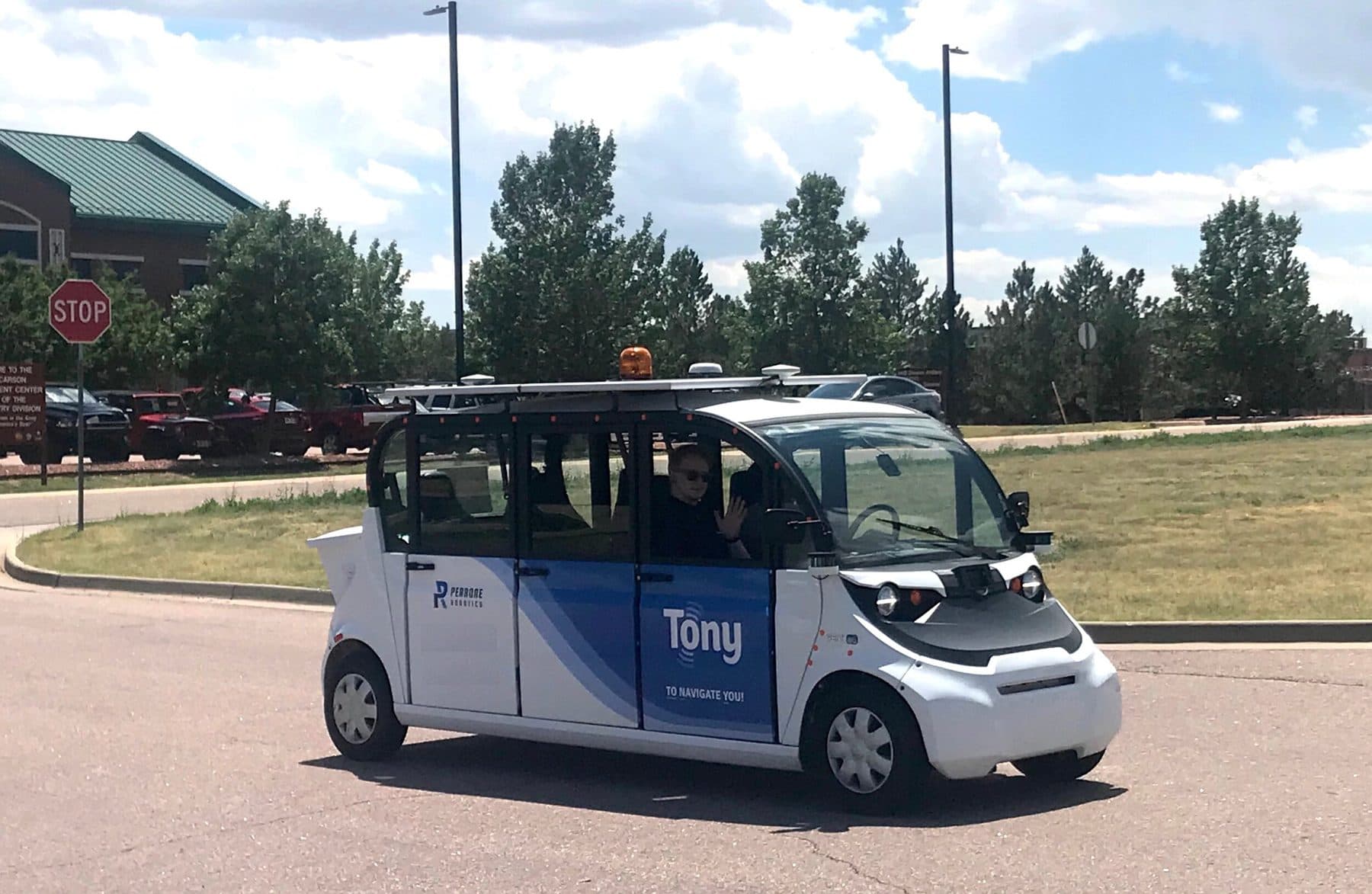
Fort Bragg: the first one
Under the ARIBO program we originated and delivered the first non-tactical driverless vehicle pilot on a US military installation, at Fort Bragg.
It was deliberately small. Not base-wide, but a single route on the Womack Army Medical Center campus, carrying soldiers between the Warrior Transition Battalion barracks and the hospital. About half a mile, five stops, a defined population and a contained environment. The riders were wounded and recovering soldiers, which raised the bar rather than lowering it.
Non-tactical matters. This was not a weapons platform or a battlefield system. It was autonomy doing ordinary campus work, moving people between buildings, which is exactly why it turned out to be the template for everything that followed in the commercial world.
There was no precedent to work from. Every question about authorization, supervision, operating boundaries and who was accountable when something unexpected happened had to be answered for the first time.
The technology was not ready yet
The pilot ran its course and stopped. It never went into full operation, and we are not going to dress that up. The systems of that era were not reliable enough to run driverless as a permanent service, and no amount of good program design changes that.
The same thing happened at Fort Carson, where we advised US Ignite on the automated shuttle pilot. Capable enough to demonstrate. Not yet dependable enough to be relied upon.
In both cases the option existed to keep investing and keep maturing the technology toward the standard full operation actually required. Nobody did. That was the pattern across most early pilots, and it is the honest reason so many of them ended.
Alongside those we created plans for another four or five installations around the country, several of which never made it past planning. Knowing which ones were not going to work, and why, is a significant part of what we learned.
Why that is worth something now
Much of the technology that was not ready then is ready now. The gap that stopped those programs has largely closed.
What has not changed is everything around the vehicle: how you define where it is allowed to operate, how you evidence that it is safe, how you tell whether a vendor's capability is real or aspirational, and who inside the organization owns it once the pilot ends. We learned all of that the expensive way, on programs where the technology could not carry the deployment on its own.
So when we tell a client a system will or will not hold up in their operation, that judgment comes from having been wrong about it before, back when being wrong was the only way to find out.
Why the military work still matters
Installations are the closest analogue to the environments we work in now. A base is a large campus with controlled access, mixed traffic, a resident population, its own rules, its own safety culture and leadership that is personally accountable for what happens on it. So is an airport. So is a resort. So is an industrial site.
Everything the commercial market is discovering about deploying autonomy into an operated environment, the defense side worked through first, usually with less budget and a lower tolerance for surprises.
Those early pilots did not end because anyone lost interest. They ended because the technology was not dependable enough yet. It largely is now, and we know what that took.